
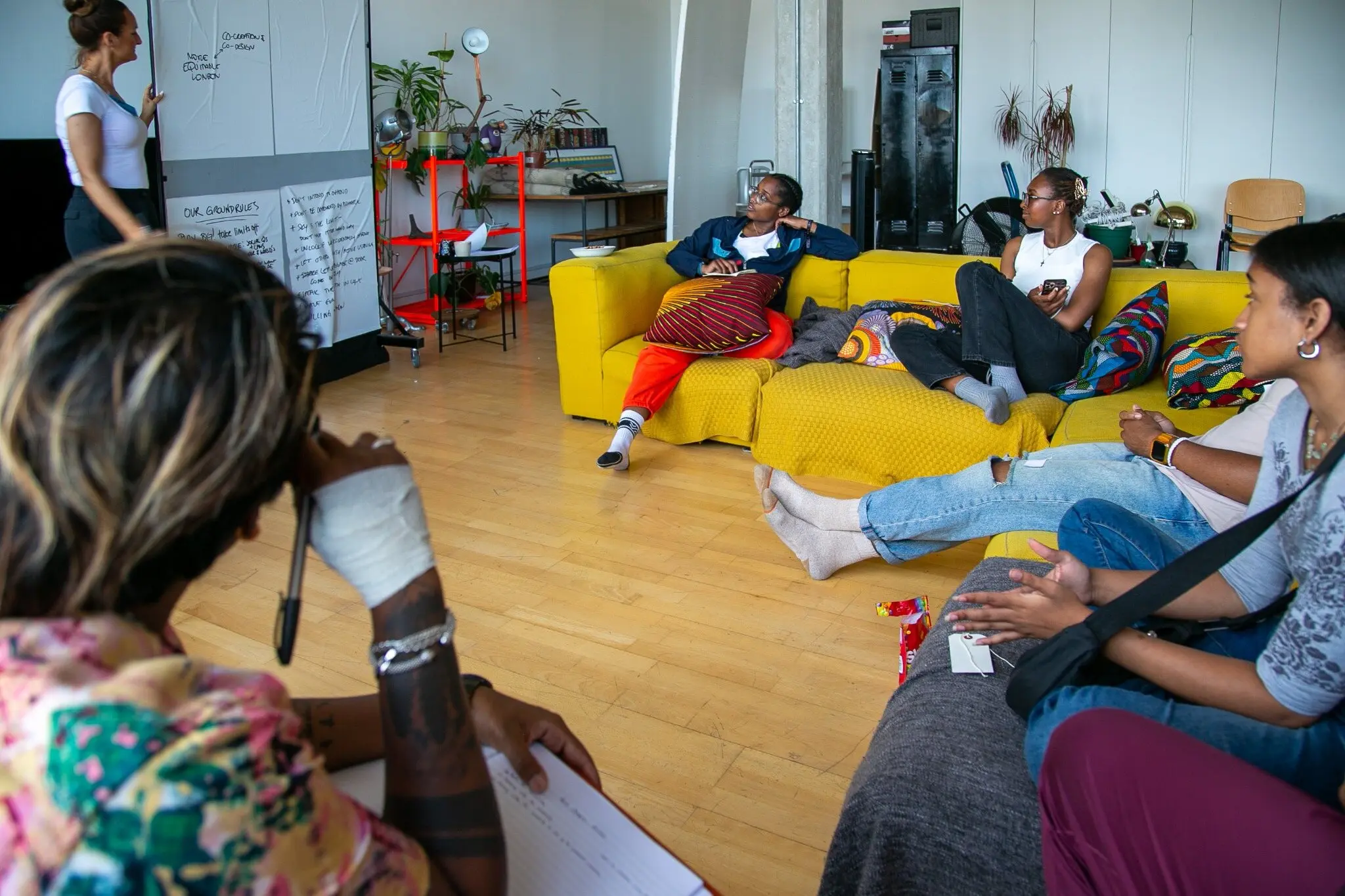
A close look at two live programmes.
The independent study combined a literature review, case-study analysis and interviews with 11 programme participants, funders and delivery partners. It focused on the Young Entrepreneurs Alliance and Mothers & Care: different programmes using the same underlying principle that people closest to a challenge should help shape the response.
This was a small, qualitative study rather than a universal claim about co-design. Its value lies in showing how the method was experienced in practice—and where stronger future evaluation should go deeper.
Confidence grew alongside practical capability.
Among those interviewed, 63.6% said the programmes increased their confidence. Participants described moving from ideas towards execution, developing entrepreneurial skills and receiving the tailored resources, mentoring and practical encouragement needed to keep going.
The research also found that flexibility mattered. YEA! could adapt learning around founder needs, while Mothers & Care combined football, childcare and wellbeing support around the realities of mothers’ lives. Co-design was not an extra workshop; it changed the shape of delivery.
Connection was part of the outcome.
The study found that 81.8% of interviewees felt the programme had helped build a mutual-support network, while 54.5% said it brought them together with people doing similar things. Participants shared knowledge, reduced the isolation of entrepreneurship and created routes into mentors, partners and opportunities.
That matters to our methodology now. We design for the immediate outcome and for what remains afterwards: stronger relationships, greater confidence, shared capability and a clearer route to the next opportunity. Future work should keep testing these effects with larger samples and longer-term follow-up.
“Co-design was not an extra workshop; it changed the shape of delivery.”