
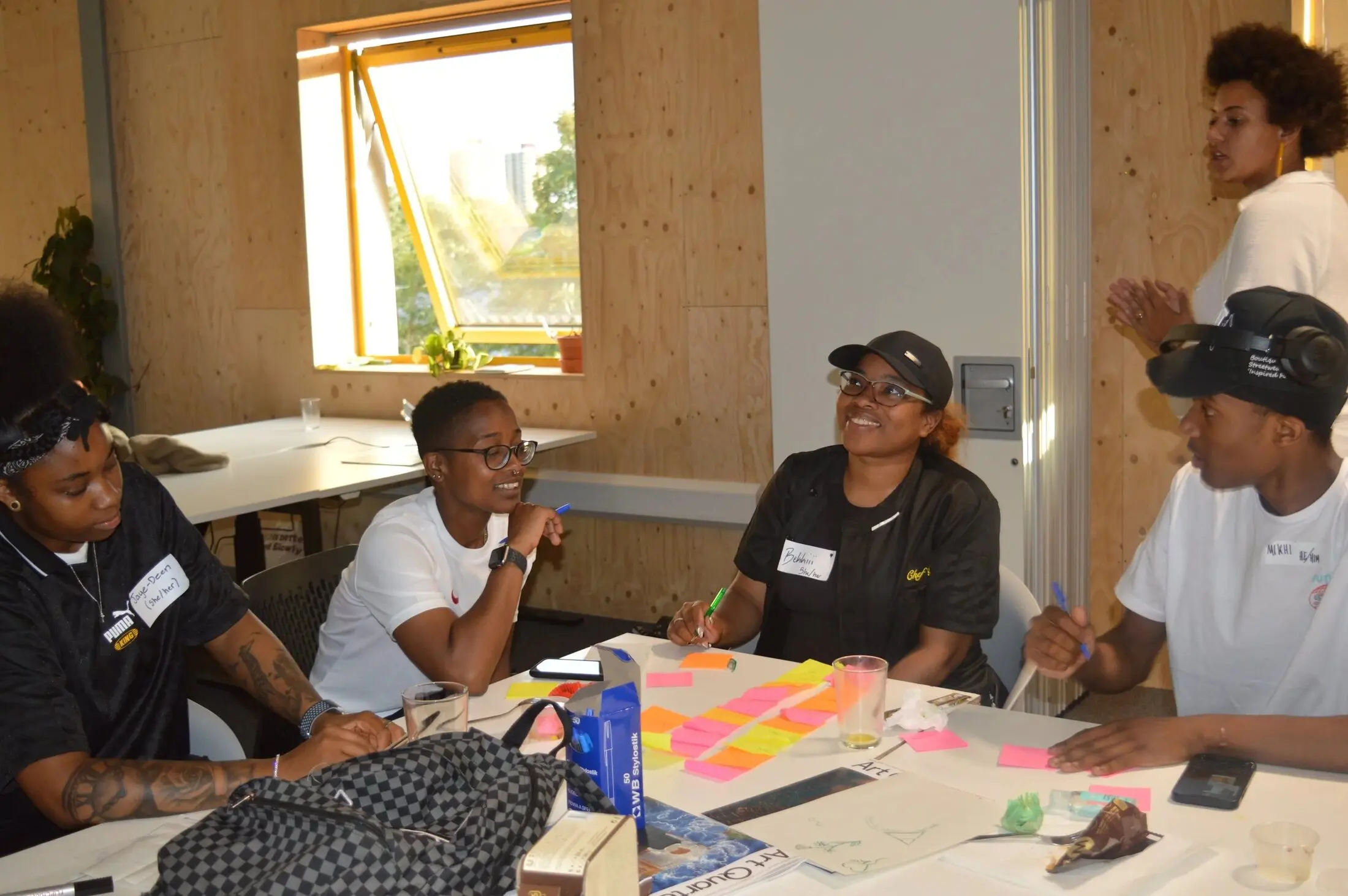
The room is not the outcome.
Community engagement is often judged by what is easiest to count: attendance, workshops, survey responses and demographic reach. Those measures matter, but they say very little about whether people’s knowledge altered the decision that followed.
A well-run session can still become extraction if the institution leaves with richer insight while the community leaves with no greater influence, capability or route into delivery. The test is not simply whether people were heard. It is whether the work became different because they were there.
Treat local intelligence as operating infrastructure.
The people closest to a place often understand its informal networks, barriers, histories and possibilities with a precision that no external dataset can provide. That knowledge should shape the operating model, not sit in an appendix labelled engagement.
In practice, this means bringing community partners into the questions before the solution is fixed; making decision rights visible; paying people for expertise where appropriate; and showing clearly what changed, what did not and why. It also means designing outputs that others can actually use: a shared methodology, a funded pathway, a stronger local organisation or evidence that improves the next decision.
Leave more than a report.
Our work with the Community Anchors Network turned collective values and lived intelligence into a shared methodology. With the UK Democracy Fund, research sat alongside practical capacity support for Black-led organisations testing trusted routes into democratic participation. The outputs were different, but the principle was the same: insight and capability had to travel together.
This is why we think of community knowledge as infrastructure. Infrastructure carries value beyond a single moment. It strengthens the routes between people, institutions and opportunity. When a commission ends, the relationships should be clearer, the local capability stronger and the next decision better informed than the last.
“The test is not simply whether people were heard. It is whether the work became different because they were there.”